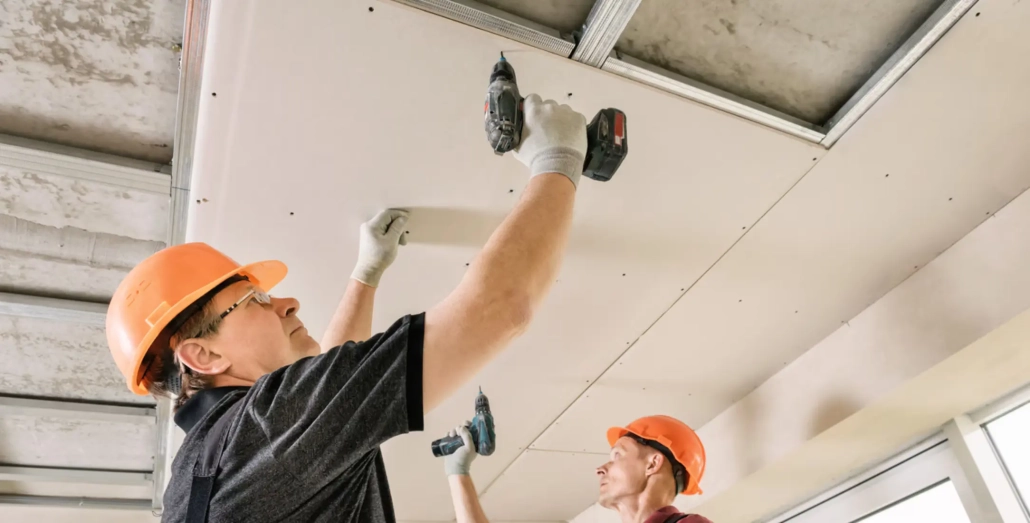
How Much Does It Cost to Install Drywall – Save on Your Project
Do you have any remodelling plans for your home? Drywall is one of the most critical processes; it makes the walls smooth and ready for paint and design. Before you begin, you must know the cost to install drywall. It helps you plan expenses better and avoid financial problems later.
Many people think the cost only includes drywall sheets; however, this is not correct. Labor, materials, and finishing work are also included in the drywall expense. Estimating the project cost before beginning is essential as it helps avoid budget and time overruns.
Well, in this blog, you will learn about drywall costs and simple ways to save money on this project.
Average Cost to Install Drywall Per Square Foot
The average cost per sq ft to install drywall should be known when targeting any construction project. This will assist you in approximating the overall cost of your project. In the year 2025, the cost of installing drywall is between $1.50 and $3.50 per square foot. This rate typically involves the drywall sheets, the labor to fit the sheets, and the final work. Final work involves taping, mudding, and sanding.
Drywall is available in 4-foot x 8, 10, or 12-foot-long sheets. A 4×8 sheet occupies 32ft of space. One sheet costs between $10 and $20, depending on the kind and thickness.
The total costs can range between $750 and $5000, depending on the size of the wall or ceiling area (500-1500 square feet) used in a home project. A bathroom or a bedroom project is usually less expensive. Basements or entire floors are larger areas and require additional materials and time, making them more expensive.
Cost to Install Drywall by Room Size
When you plan a drywall project, it is helpful to know the cost by room size. This makes it easy to plan your budget. Small rooms are cheaper, and large spaces require more money and effort.
The pre-cost estimates, in the knowledge of what you are getting into at the beginning of your project, benefit you in knowing what to expect. It also makes it simple to compare prices and choose the best option available. Below, you can see a chart that explains the average cost for drywall installation based on different room sizes.
| Room Size (in Sq. Ft.) | Average Cost To Install Drywall |
| 100 (Small Bathroom) | $400–$650 |
| 200 (Small Bedroom) | $550–$1,000 |
| 300 (Large Bedroom) | $900–$1,500 |
| 400 (Small Living Room) | $1,100–$2,200 |
| 500 (Large Living Room) | $1,400–$2,800 |
| 600 (Large Space) | $1,700–$3,100 |
Cost of Drywall Installation by Type
The room and building regulations, as well as the requirements of your project, determine the type you use. There are different types of drywall. The most popular one is standard drywall that is used in many construction and renovation projects. When it is damp, as in the case of bathrooms or basements, it is better to use drywall that is moisture-resistant. Commercial areas or multi-family housing owners must use fire-rated drywall more often.

Here are the multiple types of drywall, along with their specifications and cost details.
● Standard Drywall
The most widely used is standard drywall, which is used in homes. It has a cost of installation between $1.50 and $2.50 per square foot. The material itself is approximately $0.42 to $0.50/square foot. This type is made with a gypsum core covered by paper, and is found in most walls and ceilings in residential interiors.
Standard drywall is quick to install and affordable. It provides a flat plane on which painting or coating is simple. Most contractors use this option in bedrooms, living rooms, and other areas in the home unless a special type of drywall is required.
● Paperless Drywall
Paperless drywall is priced at $1.75 to $4 per square foot installed. The material itself will cost $0.63 to $0.92 per square foot, or roughly $15 to $22 per sheet. It does not contain a paper layer, unlike normal drywall. Instead, it has a gypsum centre encased by fiberglass, which makes it more robust, and it does not succumb to moisture and mold.
Due to its fiberglass surface, it is difficult to cut and install compared to regular drywall. The texture is also not as smooth, hence it is harder to finish. These features often raise labor costs compared to standard drywall installation.
● Moisture-Proof Gypsum Board
Green board is also known as moisture-proof drywall and is used in places where moisture is high. It is between $1.65 and $2.75 a square foot with materials and installation. Material price ranges between $0.63 and $0.54 per square foot. This board is coated in a way that it does not absorb moisture and hence is preferable in a bathroom, a basement, or a laundry room.
The green board is easy to handle and installs in the same way as standard drywall. Some types are strong enough for tiling in kitchens or bathrooms, especially for backsplashes or walls away from the shower. If you are planning the cost to install drywall ceiling in damp spaces, this option will give better results and more extended durability.
For stronger protection, a purple board is available. It resists moisture and also helps prevent mold. If your home has had these issues before, purple board will be a better choice than green board for added safety.
● Plasterboard Blue
Blue board or plasterboard costs between $1.55 and $2.55 to install per square foot. The cost of the material is between $0.46 and $0.58 per square foot. It is not precisely similar to standard drywall, but it is frequently used in its place. The blue board is designed to work with plaster finishes. Standard drywall is not suitable for heavier plaster or Venetian plaster, which are common in some homes.
This board is also called plaster base or plaster blue board. If you want a traditional plaster finish on your walls, blue board is the best choice instead of standard drywall.
● Fire-Resistant Drywall
Fire-resistant drywall is also referred to as Type X. It is installed at a cost of between $1.60 and $3.50 per sq ft. Its material cost is $0.50 to $0.88 per square foot. This type is commonly used in apartments, dorms, and other structures with a large population. Some homes also use it in certain areas where safety comes first.
This drywall has a gypsum core with fiberglass fibers. The fibers make it stronger and able to resist fire. It is harder to cut and handle than standard drywall, hence it is usually used only when building codes or safety needs require it.
● Acoustic Insulation Drywall
Soundproof drywall, also known as acoustic insulation drywall, ranges in price between $3.55 and $7.50 a square foot installed. The material cost is between $2-3.15 per square foot. This is a drywall composed of wood fibers, polymer, and gypsum.
Due to its thickness, it is more difficult to cut and install. Drywall of this nature is more expensive to install than regular drywall; therefore, it is primarily applied in music rooms, studios, bedrooms, or any other place where it is essential to have sound control.
Read More: How Much Does it Cost to Build a House in 2025?
Factors that Can Affect Drywall Installation Cost
The installation cost of drywall is related to a lot of factors. The price varies depending on the type of drywall used, thickness, and finish. More work will also be required in older homes, hence increasing the project cost. Knowing these factors helps when determining how to install drywall and plan its budget. Let’s break down these factors for better drywall cost estimation.

● Drywall Thickness
Drywall thickness changes the total project cost. Thin quarter-inch panels are the cheapest. They are light but not very strong. Three-eighths-inch and half-inch panels are the most common. These are used in most homes and are easy to install.
Some rooms need thicker drywall. Fire-resistant drywall and soundproof drywall tend to be 5/8-inch thick. There are also instances where the drywall can be used in three-quarters of an inch. This is the kind when additional sound control is needed. The appropriate thickness will vary with your budget and with your project requirements.
Choosing the right size will assist you in achieving strength, safety, or sound control in your walls or ceilings.
| Drywall Thickness (Inches) | Ideal Use Case | Average Cost per Panel |
| 1/4 | Curved areas or patches | $15 |
| 3/8 | Patches or repairs | $16 |
| 1/2 | Standard walls | $20 |
| 5/8 | Standard ceilings, fire-proofing | $21 |
| 3/4 | Sound-proofing, fire-proofing | $23 |
● Drywall Finish Level
The cost of the drywall project depends on the finish level you choose. Each level adds more work and materials, hence increasing the project expense. A simple finish will be cheaper, and a smooth or detailed finish will be more expensive. Your contractor will discuss the options with you so that you get to decide what best fits your project.
| Level | Description | Average Cost (per sq. ft.) |
| 0 | Drywall is hung with no extra work | $0.80 – $1 |
| 1 | Seams are taped and covered with mud | $1 – $2 |
| 2 | One coat of joint compound, often used under tile | $1.25 – $2.50 |
| 3 | Two coats of joint compound for a smoother wall | $1.50 – $3 |
| 4 | Three coats of joint compound, good for matte paint | $1.65 – $3.15 |
| 5 | Three coats plus a skim coat for a smooth surface, best for gloss or enamel paint | $2 – $3.50 |
● Age of Your Home
The age of your home can change the cost of drywall. Mold problems are common in older houses. Before hanging new drywall, it is smart to get a home inspection. This will show if these issues are present. Asbestos, lead, or mold removal (if required) will cost as much as $1,000-3000 or more. These issues should be resolved before the installation of drywall. Knowing this is as important as learning how to install drywall anchors or other simple home projects.
Want to know the exact cost to install drywall for your project? At Nedes Estimating, we provide accurate and affordable estimates to help you save. Contact us today and start your project with confidence!
● Location
Your location affects drywall installation costs. In big cities, labor is more expensive, so you will have to pay higher rates. In rural areas, the price is usually lower. Rates also change with local wages, supplier demands, and building codes that guide the work in each region.
Read More: How much does a foundation cost per square foot?
Tips on Saving Money On a Drywall Installation Project
- Get quotes from at least three contractors to find the best value for money.
- Pick lower-level finishes for bedrooms or storage rooms to save money.
- Choose standard drywall for most rooms to save the maximum.
- Use specialty drywall only in bathrooms, garages, or basements.
- Do the little jobs yourself, such as taking down old drywall or repairing holes.
- Ensure that it is done properly to save maintenance or repairing expenses in the future.
Final Thoughts
Drywall is a crucial part of any construction or reconstruction project, and understanding the total project cost helps with better planning and fewer unexpected issues. Since every project is different, it is always best to get a custom estimate from a local construction estimating company or drywall professional.
This gives you a clearer idea of what to expect, helping you make decisions that fit your budget and project timeline. With a proper understanding of the key cost factors, you can choose the right materials, stay within budget, and complete a home that looks exactly the way you want.
FAQs
How much does drywall and texture cost?
Drywall and texture costs vary by finish. Styles, such as knockdown, orange peel, and skip trowel, provide walls that stand out, increasing the project budget. To add texture and paint attracts the additional expense of $1-3 per square foot.
Do you need a permit to replace drywall?
Most of the time, you are not required to get a permit to substitute drywall. The licenses are mostly necessary when there are structural changes, electrical, or plumbing work. Uncomplicated wall and ceiling drywall replacement is usually exempted.
What is the typical lifespan of a drywall installation?
Drywall has an average life of 30 to 70 years. Remember that its life cycle is dependent on many variables, such as moisture, mold, and other damage. Drywall can last decades with no problems if it is taken care of properly.