Will Construction Material Prices Go Down in 2026? The Brutal Truth Every US Contractor Needs to Hear
If you clicked on this article hoping for a massive sigh of relief, I hate to be the bearer of bad news. You might want to sit down.
Every single day at NEDES, we field the exact same frantic question from anxious developers, frustrated general contractors, and weary project managers across the United States. “When is the bleeding going to stop? Will construction material prices finally go down in 2026?”
Let’s not sugarcoat it. The short answer is a resounding No.
Prices aren’t dropping. In fact, if the first quarter of this year is any indicator, they are climbing at a pace that is catching even the most seasoned industry veterans completely off guard. You see, the construction market doesn’t exist in a vacuum. It is heavily tethered to global events, energy markets, and domestic trade policies. And right now? That combination is cooking up a perfect storm of price escalation.
We don’t deal in speculation here. At NEDES, construction estimation is a science driven by hard data, relentless market analysis, and boots-on-the-ground reality. If you are bidding on a project today using pricing models from late 2025, you are essentially setting your profit margins on fire.
The 12.6% Shockwave: What the 2026 Numbers Actually Say
Let’s start with the hard numbers, because numbers don’t lie. Going into this year, there was a quiet, cautious optimism. Softwood lumber prices had softened just a bit. The market felt like it was finally taking a much-needed breath after the chaotic post-pandemic years. But that optimism shattered almost instantly.
According to recent analysis from the Associated Builders and Contractors (ABC), input prices for nonresidential construction didn’t just creep up; they surged at a staggering 12.6% annualized rate during the first two months of 2026 alone. Yes.
What is driving this? It isn’t just one thing. It is a cascading failure across multiple supply chains, spearheaded by massive spikes in the costs of oil, copper, aluminum, and steel. If you look at the producer price indexes year-over-year from February 2025 to February 2026, the data is genuinely alarming.

|
Material Category |
Year-Over-Year Price Increase (Feb ’25 to Feb ’26) |
Primary Drivers |
| Aluminum Mill Shapes | + 39.1% | Smelter shutdowns, Middle East conflict, shipping delays |
| Steel Mill Products | + 20.9% | Global tariffs, domestic capacity constraints and energy costs |
| Structural Metal & Rebar | + 20.0% | Heavy infrastructure demand, elevated production costs |
| Copper & Brass Mill Shapes | + 15.1% | Pre-existing commodity trends, EV market demand |
| Nonresidential Inputs | + 3.1% (Overall) | Freight costs, diesel spikes, supply chain rerouting |
When an essential material like aluminum jumps nearly 40% in a single year, the ripple effects are catastrophic for project budgets. Suddenly, your window systems, curtain walls, roofing components, and electrical conduits are blowing through their contingencies before the foundation is even poured.
But to understand why these metals are skyrocketing, we have to look across the world for indicators.
How the Middle East Conflict is Taxing Your Job Site
You might be pouring concrete in Texas or framing a commercial build in Ohio, wondering what international politics has to do with your daily operations. The reality is that it impacts almost everything.
Impact Of 2026 Iran-Israel War
The escalating Iran-Israel-USA war has thrown global energy and shipping markets into absolute chaos. This isn’t just a news headline to passively scroll past. It is a direct, aggressive tax on every single piece of material that hits your job site.
Why? Because construction is an inherently energy-intensive industry. Energy is the invisible ingredient in everything you build.
Strait Of Hormuz And Oil Supply Impact
The conflict has severely disrupted shipping through the Strait of Hormuz. For context, this narrow waterway normally carries roughly 20% of the entire global oil supply. When tankers can’t get through, or when they are forced to reroute all the way around Africa to avoid hostile waters, two things happen immediately: transit times extend by weeks, and oil prices explode.
Diesel fuel is the lifeblood of the American construction site. It moves the dirt. It runs the generators. It fuels the massive freight trucks delivering your structural steel. In just the first few weeks of this crisis, diesel prices jumped over 20%. That spike translates directly into higher freight rates and skyrocketing plant hire costs.
How Oil And Natural Gas Shortage Changes Manufacturing Materials
Manufacturing materials like cement, glass, bricks, and steel requires massive amounts of heat and electricity. When natural gas and energy costs surge, the production costs for these materials follow suit immediately.
Furthermore, the petrochemical industry is taking a massive hit. Dow Inc. recently highlighted severe petrochemical supply disruptions linked directly to these Middle East tensions.
What does a petrochemical shortage mean for a U.S. contractor? It means that materials derived from oil and natural gas feedstocks (think PVC piping, insulation foam, roofing membranes, synthetic flooring, and sealants) are all becoming significantly more expensive and harder to source. Energy prices dictate material prices. It is a fundamental law of construction economics.
The Aluminum Crisis In the US
Let’s talk specifically about aluminum, because it is arguably the biggest casualty of the current geopolitical landscape.
The Middle East is a meaningful exporter of primary aluminum. Because of the ongoing conflict, major aluminum smelters in places like Bahrain and Qatar have been forced to suspend shipments entirely.
With Middle Eastern supply choked off, buyers are scrambling. They are paying astronomical premiums just to secure whatever supply is left on the market. Just look at the Premium Duty Paid U.S. Midwest. In January of 2025, that premium sat comfortably around $500 per tonne. Today? It has spiked violently to $2,200 per tonne.
That is exactly why your curtain wall providers are suddenly sending over revised, heavily inflated quotes. The raw material cost has quite literally quadrupled.
Concrete and Cement: The 25% Tariff Trap
Now, let’s pivot away from global wars and look at domestic trade policies, because they are doing their own fair share of damage to your 2026 budgets.
If there is one material you absolutely cannot build without, it is concrete. And right now, the concrete market is dealing with a brutal reality check in the form of import tariffs. The best approach for estimators would be to integrate real-time tariff tracking in their estimation software.
The United States does not produce enough cement to sustain its own infrastructure and commercial building needs. We import roughly 20% of our total cement consumption. Historically, we have relied heavily on our neighbors to bridge that gap. According to recent data, Canada supplies about 5 million metric tons, and Mexico supplies another 2 million. Together, they account for over a quarter of all U.S. cement imports.
Waiting for material prices to drop in 2026? Contact Us now to get a quote!
When a 25% tariff hits imports from both Canada and Mexico, the pricing math for a yard of concrete changes overnight. Currently, ready-mix concrete in the U.S. is sitting between $125 and $200 per cubic yard for standard 3,000–4,000 PSI mixes. While cement only makes up about 10–15% of the total cost of ready-mix concrete, a 25% hike on that foundational ingredient ripples aggressively through the entire supply chain.
Northern states, like New York and Washington, which heavily rely on Canadian imports (accounting for up to 36% of their regional consumption), felt this impact first and hardest. But the pain is rapidly spreading nationwide.
To put this into perspective, let’s look at how this tariff practically impacts standard pours on a typical job site:
| Project Scope | Estimated Concrete Required | 2025 Pre-Tariff Cost Estimate | 2026 Post-Tariff Cost Estimate | Estimated Cost Increase |
| Standard Garage Slab (24×24 ft) | ~7 cubic yards | $840 – $1,050 | $875 – $1,400 | + $35 to $350 |
| Standard Driveway (20×30 ft) | ~7.5 cubic yards | $900 – $1,125 | $940 – $1,500 | + $40 to $375 |
| New Home Foundation (1,500 sq ft) | ~25–35 cubic yards | $3,000 – $5,250 | $3,125 – $7,000 | + $125 to $1,750 |
You might be asking, “Why don’t we just produce more cement here in the US and avoid the tax?”
It is a completely fair question, but it ignores the reality of heavy industrial manufacturing. Building a new, fully operational cement plant takes anywhere from two to three years from the initial approval stages to actual production. Even if domestic producers had unlimited capital and wanted to replace every single imported ton tomorrow, they physically cannot scale fast enough.
The capacity problem is ultimately worse than the tariff itself. It means these price increases are baked into the market for the foreseeable future. They will not self-correct next month. They likely won’t even self-correct next year.
What This Means for Construction Estimation in 2026
At NEDES, we always tell our clients that hope is not a strategy. After estimating the quantity of materials, crossing your fingers and praying that the market cools down before you break ground is a surefire way to bankrupt a project before the dirt is even moved.
The sheer volatility we are seeing right now means that the margin for human error in construction estimating has completely evaporated. Two years ago, you could perhaps survive a slightly sloppy takeoff or a ballpark estimate because material prices were somewhat predictable. Not anymore!
If you are a general contractor, a developer, or a subcontractor trying to navigate this chaotic landscape, you have to lean into the storm. You must continuously evaluate published tariff rates against your project specifications.
Why Your 2x4s are Defying Gravity
If you spent any time looking at commodity tickers in late 2025, you might have seen a glimmer of hope for lumber. Prices were dipping, and the “experts” were predicting a return to the “old normal.” Well, the first quarter of 2026 has officially entered the chat, and it has brought a reality check with it.
As of early 2026, the national average for framing lumber is sitting around $872 per thousand board feet (MBF). Now, on paper, that looks like a 3.4% decrease from the tail end of last year. You might think, “Great! NEDES experts, didn’t you say prices weren’t going down?“
Here is the catch: while we saw a tiny seasonal dip, year-over-year lumber costs are actually up nearly 13%.
The lumber market in 2026 is acting like a coiled spring. We are currently facing a “perfect storm” of supply constraints. Canadian softwood lumber (which the U.S. residential market relies on like oxygen) is being hammered by two massive factors. First, a historic wildfire season in 2025 decimated timber yields. Second, the U.S. Department of Commerce has maintained aggressive anti-dumping duties on Canadian imports.
When you combine restricted supply with the fact that the Federal Reserve is finally signaling potential interest rate cuts for mid-2026, you get a recipe for a price explosion. As soon as those rates drop, the sidelined housing demand is going to flood the market. If you wait until then to buy your lumber, you’ll be bidding against every other contractor in America for a dwindling supply.
|
Pro Tip from the NEDES Desk |
|
We are advising our clients to “pre-position” materials. If you have the staging space and the liquidity, locking in lumber contracts now (before the spring/summer surge) could save you 15% to 20% on your total framing budget. |
The Human Cost: 500,000 Reasons Why Estimates are Climbing
Here is a hard truth that many price guides ignore: the cost of a material isn’t just what you pay at the supply house; it’s what it costs to get it onto the building.
In 2026, the U.S. construction industry is staring into a massive void. According to the Associated Builders and Contractors (ABC), we need to recruit over 500,000 new workers this year just to meet current demand. This isn’t just a shortage but a structural crisis.
- The Retirement Wave: More than 20% of our skilled tradespeople are over the age of 55. They are aging out faster than the next generation is aging in.
- The Skill Gap: Modern buildings (think high-tech data centers and LEED-certified commercial hubs) require specialized MEP (Mechanical, Electrical, Plumbing) skills that are in incredibly short supply.
- The Wage Spiral: To attract anyone at all, contractors are being forced to hike wages. In some metros, base pay for skilled laborers has jumped 8-10% in the last 12 months alone.
When labor is scarce, material prices effectively go up because the efficiency of installation goes down. If a crew of four takes six days to do a job that used to take four days, your effective material-in-place cost has skyrocketed. This is why NEDES’s 2026 estimation models now include a Labor Volatility Factor to ensure our clients aren’t blindsided by the cost of actually getting the work done.
The War Surcharge and the 2026 Energy Crisis
We cannot discuss 2026 without addressing the elephant in the room: the Iran-Israel-USA conflict. This isn’t just a geopolitical tragedy; it is a direct tax on American construction.
The shipping containers disruptions in the Red Sea and the Strait of Hormuz have pushed freight costs to levels we haven’t seen since the height of the pandemic. For materials like copper and structural steel, which often travel long distances before reaching a domestic distributor, the shipping “surcharge” is now a permanent line item.
Furthermore, diesel prices in the U.S. have been wildly unpredictable. Since heavy machinery and logistics are diesel-dependent, a $1.00 jump at the pump can add 2% to the total cost of a massive earth-moving or paving project within forty-eight hours.
Protecting Your Profit
In 2026, the “Lump Sum” contract is becoming a relic of the past. If you sign a fixed-price contract today for a project starting in six months, you are gambling with your company’s life.
We are seeing a massive shift toward Index-Linked Escalation Clauses. These are contractual provisions that allow for price adjustments based on objective market data (like the Bureau of Labor Statistics’ Producer Price Index).
|
Strategy |
How it Works |
Why it’s Crucial in 2026 |
| Material Pre-Purchase | Buying and storing “long-lead” items (HVAC, switchgear) 6-9 months early. | Avoids “at-time-of-shipment” price spikes. |
| Escalation Clauses | Tying bid prices to specific commodity indexes (Steel, Copper). | Shares the risk of market volatility with the owner. |
| Alternate Sourcing | Swapping specified brands for available, domestic equivalents. | Bypasses international shipping delays and tariffs. |
| AI-Driven Estimating | Using real-time data feeds to update bids. | Ensures profit margins aren’t eroded by 24-hour price swings. |
The Verdict: Will Prices Drop?
Let’s be real. In the construction world, “prices going down” usually means they are just rising slower than they were before.
While certain categories like softwood lumber might see minor technical corrections, the overall trajectory for construction inputs in 2026 is upward. Between 25% tariffs on Mexican and Canadian cement, a global aluminum shortage driven by war, and a domestic labor crisis that shows no signs of slowing, the “bargain” era of construction is over.
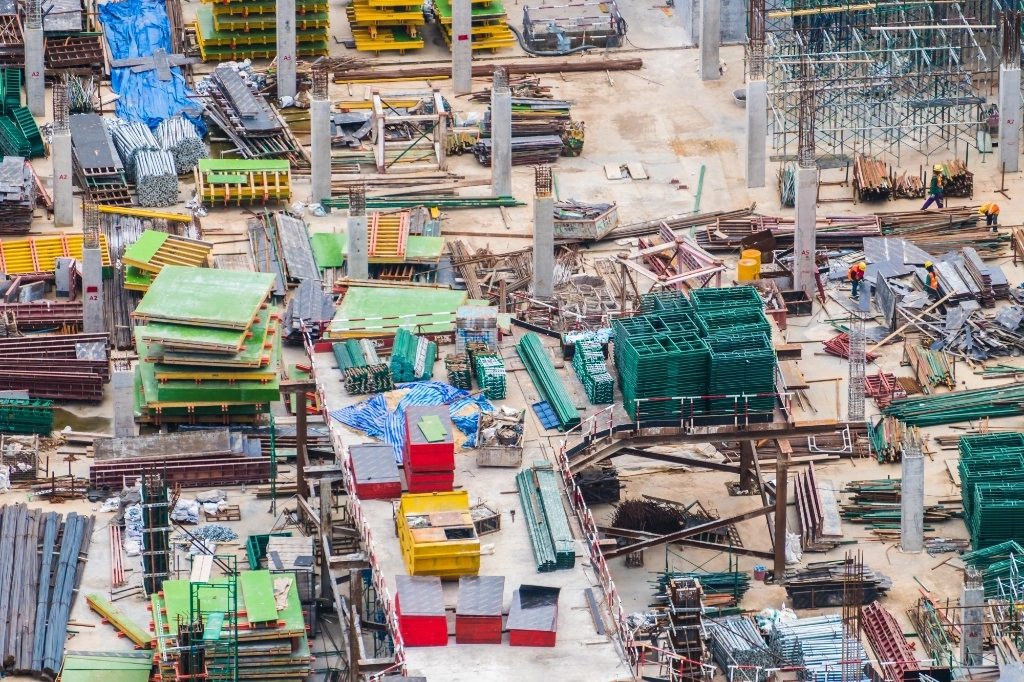
Success in 2026 isn’t about finding the cheapest materials; it’s about having the most accurate data. That’s where our construction estimating services jump in! We don’t just give you a number; we give you a roadmap through the most volatile market in a generation.
Conclusion
The 2026 construction landscape is a high-stakes environment where precision is the only path to profitability. Between the geopolitical shocks of the Iran-Israel-USA conflict and the domestic pressure of labor shortages and tariffs, the myth of “falling prices” has been debunked by the data.
At NEDES, we believe that being informed is your greatest competitive advantage. By leveraging real-time data, aggressive contract strategies, and expert estimation, you can navigate this storm. Don’t let 2026’s volatility be the end of your project. Let it be the reason you leveled up your strategy. Ready to build with confidence? Let’s get to work.
Frequently Asked Questions (FAQ)
1. Is 2026 a good year to start a large-scale construction project?
It depends on your financing. While material costs are high, interest rates are projected to stabilize or drop mid-year. Starting early and locking in your “buy-out” for materials before the summer rush is the smartest move.
2. Why is copper so expensive in 2026?
Beyond the Middle East conflict, the global push for Electric Vehicles (EVs) and “Green” infrastructure has created a massive demand for copper that mining companies literally cannot keep up with.
3. Will the 25% cement tariff be repealed?
Unlikely in the short term. Trade policy in 2026 remains focused on domestic protectionism. Contractors should assume these costs are here to stay and budget accordingly.
4. How can I protect my small business from these price swings?
Include “validity periods” on your quotes (e.g., “This price is valid for 7 days only”) and use professional estimators like NEDES to ensure you aren’t missing hidden costs like fuel surcharges or tariff impacts.
5. Are there any materials that are getting cheaper?
Some niche wood products like particleboard have seen slight decreases, but for major structural components (Steel, Concrete, Aluminum), the trend remains stubbornly high.