What Is The Cost to Paint a 3,000 Sq Ft House Interior? DIY vs Professional
Painting the interior of a 3,000 sq ft house costs between $6,000 and $18,000 in 2026, with most homeowners landing near $9,000 to $12,000.
But let’s not forget that interior painting cost depends on labor and materials, your region, wall condition, and surface complexity. A professional painter charges $2 to $6 per square foot across different scopes of work. Square footage is the starting point, but it rarely tells the whole story. This guide breaks down every cost variable by surface, by room, and by the decisions that actually move the final number.
Average Cost to Paint a 3,000 Sq Ft House Interior
For a 3,000 sq ft home, most homeowners pay between $6,000 and $18,000 for a full interior paint job in 2026. This number is up 5-8% from 2024 due to labor rate increases and rising TiO2 pigment costs.
The national average for a mid-range estimate sits around $9,500 to $11,000. Per square foot, interior painting price ranges from $2 to $6, depending on scope. Data from HomeAdvisor and Angi both confirm this range across thousands of contractor-reported projects.
| Scope of Work | Low Estimate | High Estimate |
| Walls Only | $4,500 | $7,500 |
| Walls + Ceilings | $6,000 | $10,500 |
| Walls + Ceilings + Trim | $8,000 | $14,000 |
| Full Interior (All Surfaces) | $10,000 | $18,000 |
These numbers shift based on several key factors. Let’s break each one down.
Factors That Affect Interior Painting Cost
Several variables determine the final price. Understanding each one helps you avoid budget surprises. Six factors consistently account for 90%+ of the variance between low and high estimates.
Labor Costs and Painter Rates
Labor accounts for 75%-95% of total interior painting cost, according to data tracked by the Painting Contractors Association. Painter labor costs run $1 to $2 per sq ft for walls only and $3 to $6 per sq ft for a full interior.
A professional 2-person crew charges $800 to $1,400 per day and can cover 1,500 to 2,000 sq ft daily under normal conditions. Labor rate per sq ft increases with experience level. That means junior painters average $18 to $24/hr while senior painters and licensed contractors charge $32 to $48/hr in major metros. Crew size also matters: a 3-person crew finishes faster but may charge a daily minimum.
Furniture moving adds $100 to $300 to most jobs. Painters charge separately for protecting flooring, furniture, and fixtures. So, always confirm whether this is included in the quoted price.
Paint Quality and Brand Selection
Budget paints run $30 to $45 per gallon. Premium brands like Benjamin Moore Aura reach $85 to $95 per gallon in 2026. Remember, a 3,000 sq ft home may require 15 to 25 gallons per coat, depending on application method and wall porosity.
| Brand | Price/Gallon | Coverage | Coats Needed | Longevity |
| Behr Premium Plus | $35-$45 | 350-400 sq ft | 2 | 5-7 years |
| Valspar Signature | $38-$50 | 350-400 sq ft | 2 | 6-8 years |
| PPG Manor Hall | $42-$55 | 350-400 sq ft | 2 | 6-8 years |
| Sherwin-Williams Emerald | $65-$80 | 350-400 sq ft | 1-2 | 8-10 years |
| Benjamin Moore Aura | $85-$95 | 400-450 sq ft | 1-2 | 10-12 years |
Premium paint often requires fewer coats, which can offset higher material costs. Dark-to-light color transitions (such as switching from navy to white) typically require a third coat, adding 20-30% to total material and labor cost. Always confirm the number of coats in writing before the project starts.
Surface Preparation and Wall Condition
Walls in poor condition require extra prep work, and that adds directly to your final bill.
Surface preparation includes:
- Patching holes
- Skim-coating damaged sections
- Sanding rough areas
- Applying a primer coat before paint.
Drywall repair costs an average of $300 to $600 for a typical 3,000 sq ft home, according to national repair data. Textured walls and popcorn ceilings increase labor time by 15-25% and are billed as a surcharge, typically $0.50 to $1.50 per sq ft extra. Popcorn ceiling removal averages $1 to $2 per sq ft separately. Primer adds another $0.20 to $0.50 per sq ft to material cost but extends paint life by 2 to 4 years.
Ventilation matters during prep and painting. Oil-based and high-VOC paints require open windows and fans throughout the application and drying period, typically 24 to 72 hours per coat. Low-VOC and water-based paints dry in 2 to 4 hours per coat and emit fewer fumes.
Ceiling Height and Room Complexity
Standard 8-foot ceilings are the most affordable to paint. Anything higher (cathedral, vaulted, two-story) drives up labor significantly. Cathedral and vaulted ceilings require scaffolding, which adds $200 to $700 per room in rental and setup cost.
Painters working above 12 feet typically charge a height premium of 25-50% over standard rates. Architectural features like archways, columns, coffered ceilings, and wall niches require fine detail work that is billed at hourly rates of $45 to $75 rather than per square foot. A single tray ceiling in a master bedroom can add $150 to $350 to the room’s painting cost.
Geographic Location and Regional Rates
Where you live may be the single biggest variable outside of square footage. Skilled painters in New York City and Los Angeles average $38 to $48 per hour in 2026, compared to $18 to $26 per hour in rural Midwest markets.
A full interior paint job that costs $8,500 in Ohio might run $15,000 to $17,000 in Manhattan for identical work. Urban areas carry higher overhead costs (insurance, licensing, fuel, and warehouse space) all reflected in quoted rates. Spring and summer represent peak demand season, when painters are booked 3 to 6 weeks out and rarely discount. Booking in fall or winter can yield 10-15% savings from the same contractor.
Now let’s look at how costs differ by surface type inside a 3,000 sq ft home.
Interior Painting Cost Breakdown by Surface Type
Not all surfaces cost the same to paint. Here’s what to expect for each area in a 3,000 sq ft home.
| Surface | Rate | Estimated Cost (3,000 Sq Ft Home) |
| Walls | $2.00-$3.00/sq ft | $5,500-$8,000 |
| Ceilings | $0.75-$1.00/sq ft | $1,500-$2,200 |
| Trim & Baseboards | $1.00-$2.50/linear ft | $900-$2,800 |
| Doors | $50-$100 per door | $500-$1,200 (10-12 doors) |
| Accent Wall | +$50-$150/room | $250-$750 (5 rooms) |
Trim is measured in linear feet, not square feet. A 3,000 sq ft home typically carries 800 to 1,100 linear feet of trim and baseboard combined. Doors are priced per door.
Interior doors cost $50 to $75 each, while double French doors run $90 to $120 each. Bundling surfaces in a single contractor visit reduces per-surface cost by 10-20%, since setup, masking, and cleanup are shared across the job rather than repeated.
Room-by-Room Painting Cost for a 3,000 Sq Ft House
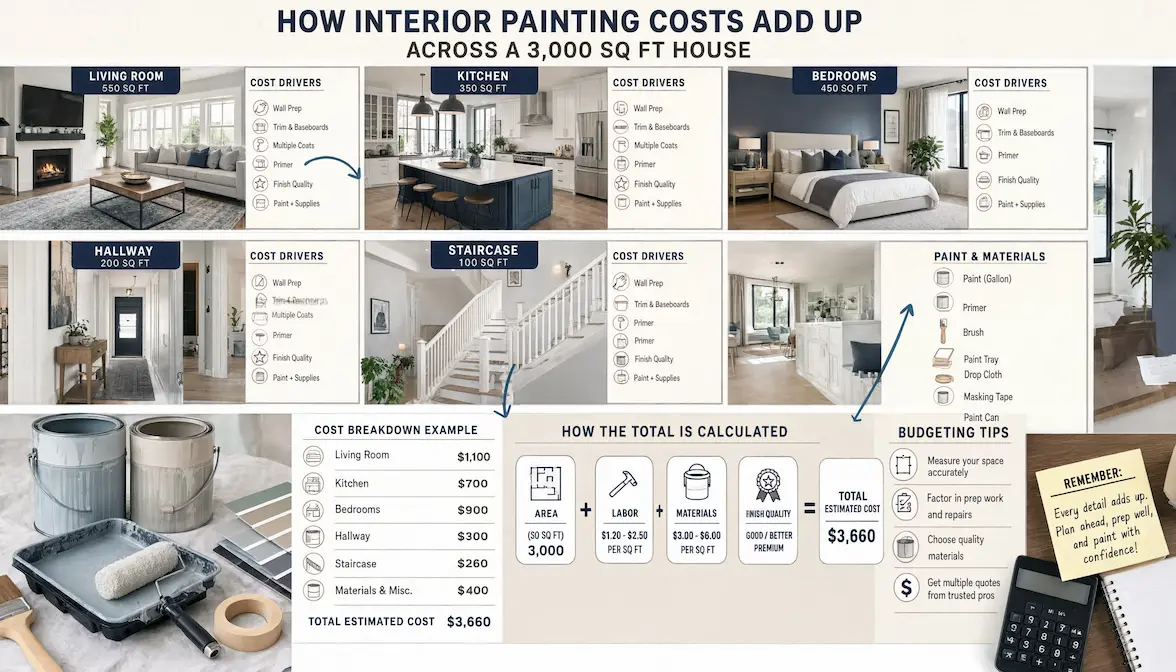
Painting costs vary by room type, not just by size, but by surface complexity and finish requirements. Here is what each room typically costs in a 3,000 sq ft home.
Living Room
Average size: 250-350 sq ft.
Cost range: $600-$1,200, including walls and ceiling.
Living rooms often feature accent walls, which add $50-$150 per feature wall. High ceilings or built-in shelving increase painter time by 15-30%. Eggshell or satin finish is standard, both clean well and reflect moderate light.
Find out the real cost of painting your 3,000 sq ft interior—compare DIY vs professional and choose the best option for your budget.
Master Bedroom
Average size: 200-300 sq ft.
Cost range: $500-$1,000.
Tray or coffered ceilings are common in master suites and add $150-$350. Walk-in closets cost $100-$250 extra to paint due to tight angles and deep interior walls. Most contractors recommend a flat or matte finish for bedroom ceilings and eggshell for walls.
Kitchen
Average size: 150-250 sq ft.
Cost range: $400-$900 for walls alone.
Cabinet painting is a separate line item: professionally painted kitchen cabinets cost $1,200 to $7,000, depending on door count, style, and finish type. Semi-gloss is standard for kitchen walls; it resists grease and cleans easily. Satin is an acceptable alternative with a slightly softer sheen.
Bathrooms
Average size: 40-100 sq ft per bathroom.
Cost range: $150-$400 per bathroom.
Moisture-resistant paint is not optional. Bathrooms require semi-gloss or high-gloss finish rated for humid environments. Using standard flat paint in bathrooms leads to mold growth and early peeling. A 3,000 sq ft home typically includes 2-3 bathrooms, bringing total bathroom painting cost to $350-$1,200.
Hallways and Staircases
Hallways: $200-$500 each.
Staircases: $300-$800 depending on height and railing complexity.
Staircases require drop-cloth protection on each step and angled brushwork around balusters, which is fully hourly-billed work. Narrow hallways above 10 feet require extension poles or small scaffolding, adding 20-30% to standard wall rates.
DIY vs. Hiring a Professional Painter: Cost Comparison
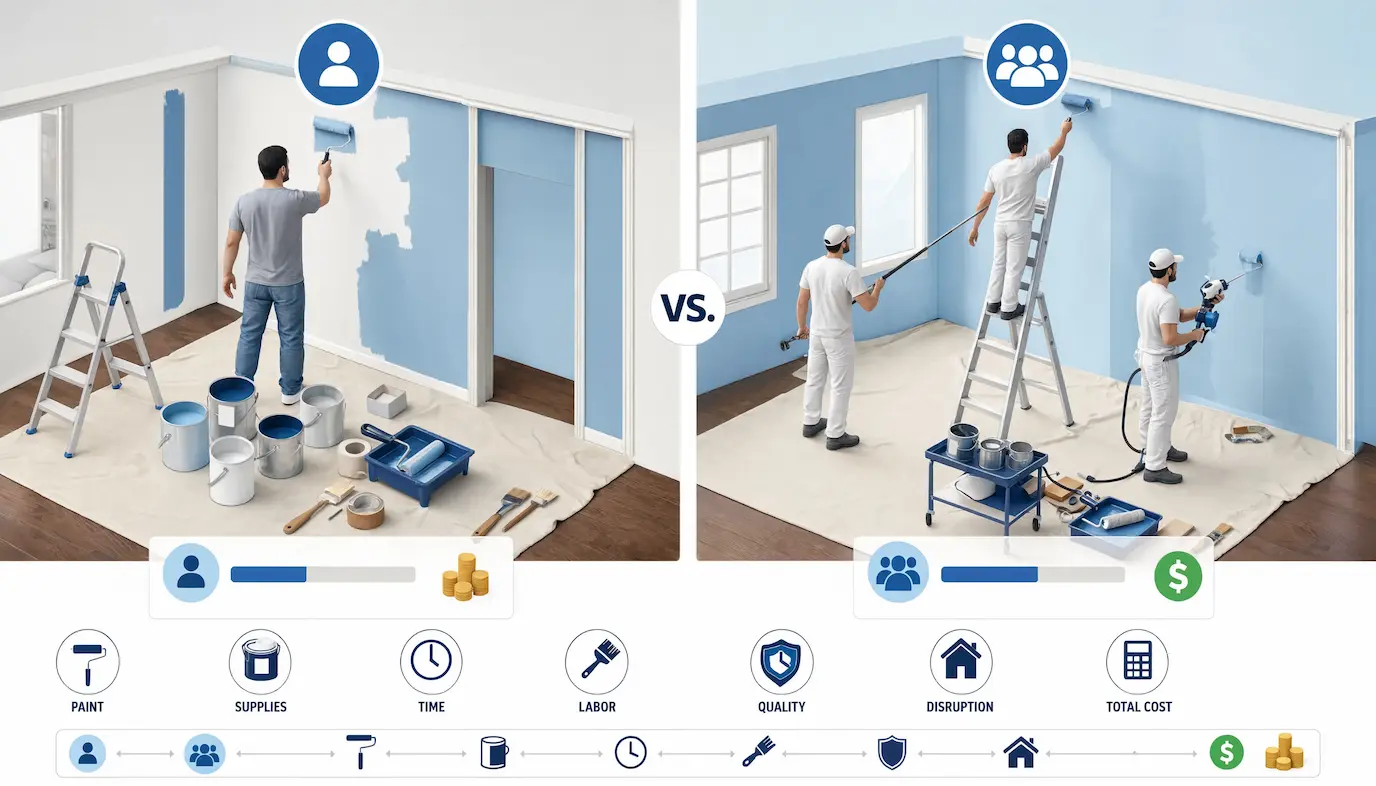
DIY painting a 3,000 sq ft home can save $1,700 to $1,800 in labor. However, it requires 3 to 6 weekends of your time and carries real quality risk on surfaces like trim, ceilings, and two-story walls.
| Factor | DIY | Professional |
| Total Cost | $800-$1,500 (materials only) | $6,000-$18,000 |
| Time Required | 3-6 weekends (100+ hours) | 5-7 days (2-person crew) |
| Finish Quality | Variable — user skill dependent | Consistent, contractor-grade |
| Surface Prep | Self-managed | Included in quote |
| Equipment | Must buy or rent | Contractor-supplied |
| Warranty | None | 1-5 years (varies by contractor) |
A 2-person professional crew completes a 3,000 sq ft interior in 5 to 7 days. DIY on the same scope realistically takes 80 to 120 hours across multiple sessions, with lower-quality results on trim, cutlines, and ceiling edges. Surface prep quality also drops significantly.
For homeowners with painting experience, DIY is a viable option for simple rooms. For full-home projects, first-time painters, or homes with complex surfaces, professional results are difficult to replicate without years of practice.
If you’re leaning toward professional painting, here’s what to look for in an estimate.
What Should a Professional Painting Estimate Include?
A legitimate painting estimate should leave no room for surprises. Here’s what to look for before signing any contract.
- Total square footage being painted, broken out by surface type
- Labor line items listed separately from materials
- Materials line items: gallons per surface, brand, and finish specified
- Paint brand, product name, and sheen level for every surface
- Number of coats confirmed in writing (typically two coats minimum)
- Surface preparation scope: patching, sanding, and priming clearly stated
- Project start date and estimated completion date
- Avoid paying more than 30% upfront
- Most reputable painters offer 1-3 years on labor
Any estimate missing three or more of these items is incomplete. Request a revised quote or move to another contractor. Verbal agreements on paint brand, coat count, and warranty are unenforceable. So, get them in the written quote.
Before you accept any quote, there are a few ways to bring the price down.
How to Save Money on Interior Painting a 3,000 Sq Ft Home
There are several legitimate ways to reduce your interior painting budget without sacrificing quality.
1. Do Your Own Wall Prep
patch holes, sand surfaces, and apply primer yourself before the painter arrives. This can reduce labor cost by $300 to $800 on a full-home project.
2. Book In Off-Peak Season
Fall and winter scheduling (October through February) yields 10-15% discounts from most contractors who need to fill their calendars.
3. Bundle Multiple Rooms Into A Single Project
Painters charge less per room when the full home is contracted together, setup, masking, and cleanup costs are absorbed across the whole job.
4. Use Paint-And-Primer-In-One Products
Products like Sherwin-Williams Emerald and Benjamin Moore Aura are self-priming on most surfaces, eliminating a separate primer coat and 4 to 6 hours of labor.
5. Get 3 Or More Competing Quotes
Angi data shows homeowners who collect 3+ bids pay 15-22% less than those who accept the first quote. Never accept a quote without at least two competitors.
6. Supply Your Own Paint (With Caveats)
Some contractors allow homeowner-supplied paint and pass the material savings to you. However, many reduce or eliminate their labor warranty when they don’t select the product; confirm this in writing before proceeding.
Still have questions? Here are the most common ones homeowners ask.
Frequently Asked Questions
How long does it take to paint a 3,000 sq ft house interior?
A 2-person crew typically completes a 3,000 sq ft interior in 5 to 7 days, including prep, two coats, and cleanup. Larger crews of 3 to 4 painters finish in 3 to 4 days. DIY on the same scope takes most homeowners 80 to 120 hours spread across 3 to 6 weekends. Drying time between coats (2 to 4 hours for latex, 24 hours for oil-based) affects the overall timeline.
How many gallons of paint do I need for a 3,000 sq ft house?
Calculate coverage at 350 to 400 sq ft per gallon for most interior paints. A 3,000 sq ft home with standard walls and ceilings requires approximately 15 to 20 gallons per coat. Two-coat applications (the standard) require 30 to 40 gallons total across all surfaces. Add 10 to 15% for trim, doors, and touch-up work. Porous or heavily textured surfaces absorb more paint and require additional gallons.
Is it worth repainting before selling a house?
Yes. A fresh interior paint job consistently produces positive ROI in pre-sale scenarios. According to Zillow research, neutral-colored interiors attract more buyers and support faster offers. The National Association of Realtors reports that sellers recover 107% of interior painting costs on average through higher sale prices and reduced time on market.
What paint finish is best for interior walls?
Eggshell and satin are the best finishes for most interior walls. Eggshell offers a low sheen, hides surface imperfections, and cleans with mild detergent. Satin is slightly shinier, more durable, and better for high-traffic areas like hallways and family rooms. Semi-gloss is required for kitchens and bathrooms due to its moisture resistance. Flat or matte finish is reserved for ceilings and low-traffic formal rooms where washability is not a concern.
How often should you repaint interior walls?
Interior walls painted with premium products last 7 to 10 years before repainting becomes necessary. Budget paints show wear in 4 to 6 years, particularly in high-traffic areas. Kitchens and bathrooms require repainting every 3 to 5 years due to humidity and cleaning frequency.
The Bottom Line
Knowing the true cost of interior painting helps you manage the budget and reduce overruns without much hassle. If it is getting difficult to wrap your head around the complex mathematical calculations of interior painting cost, a construction estimation company is your best bet.
Ready to get an accurate price for your 3,000 sq ft home? Our licensed and insured team provides free, no-obligation estimates with full cost transparency!